Pages

Showing posts with label YA. Show all posts

Monday, 10 June 2013

Summer Reading - Elizabeth Wein, Cathy Brett, Rachel Ward, Laura Jarratt, Phil Earle and Teri Terry BRING ON THE JOY.

In two weeks, I am going on what is really my first ever proper summer holiday. Beach. Ice cream. Sun. Sea. Ice cream.

This gives me the perfect excuse to kick back, relax, and spend a month's wages all in one go. Yes, it's find-some-books-on-Amazon-and-order-them-through-my-local-indie time (which adds to the financial cost, but saves on the moral one).

I've already started. I am practically drooling over here.

Elizabeth Wein's new book Rose Under Fire is out, and I am HANKERING to get my hands on a copy. I predict that this one will be finished and my face tear-streaked by the end of the two hour flight, demanding to be re-read once I get to the hotel. Those of you who have read this blog before, or indeed EVER SPOKEN TO ME, will know that I rarely shut up about Wein's last book, Code Name Verity. In fact, I like it so much that I've written not one but two review of it - on this blog and on my other blog, Space on the Bookshelf.


Then there's this one:


I'm a big fan of Cathy Brett. Quite frankly, I think she's awesome. And her new book Everything is Fine (and Other Lies I Tell Myself) is already picking up stonking reviews... (If you haven't ever heard of Cathy Brett, this might give you an idea as to her particular brand of awesome.) This book seems to me to have been packaged a little more 'seriously' than her previous books, and judging by the pace building up behind it, it's going to do great things for her. Also: one of the best titles of the year so far.

And this one...


Rachel Ward's Numbers series is something I have longed shouted about, and I was wondering what was coming next from this terrific writer - and here it is! On the surface of it, The Drowning looks very different from the dystopian thrillers of the trilogy that came before, but Numbers was always gritty, and books two and three are very dark and disturbing. I strongly suspect that when the same style and pace is taken into a contemporary thriller, the results will be unflinchingly horror-filled. (In a good way, of course!)
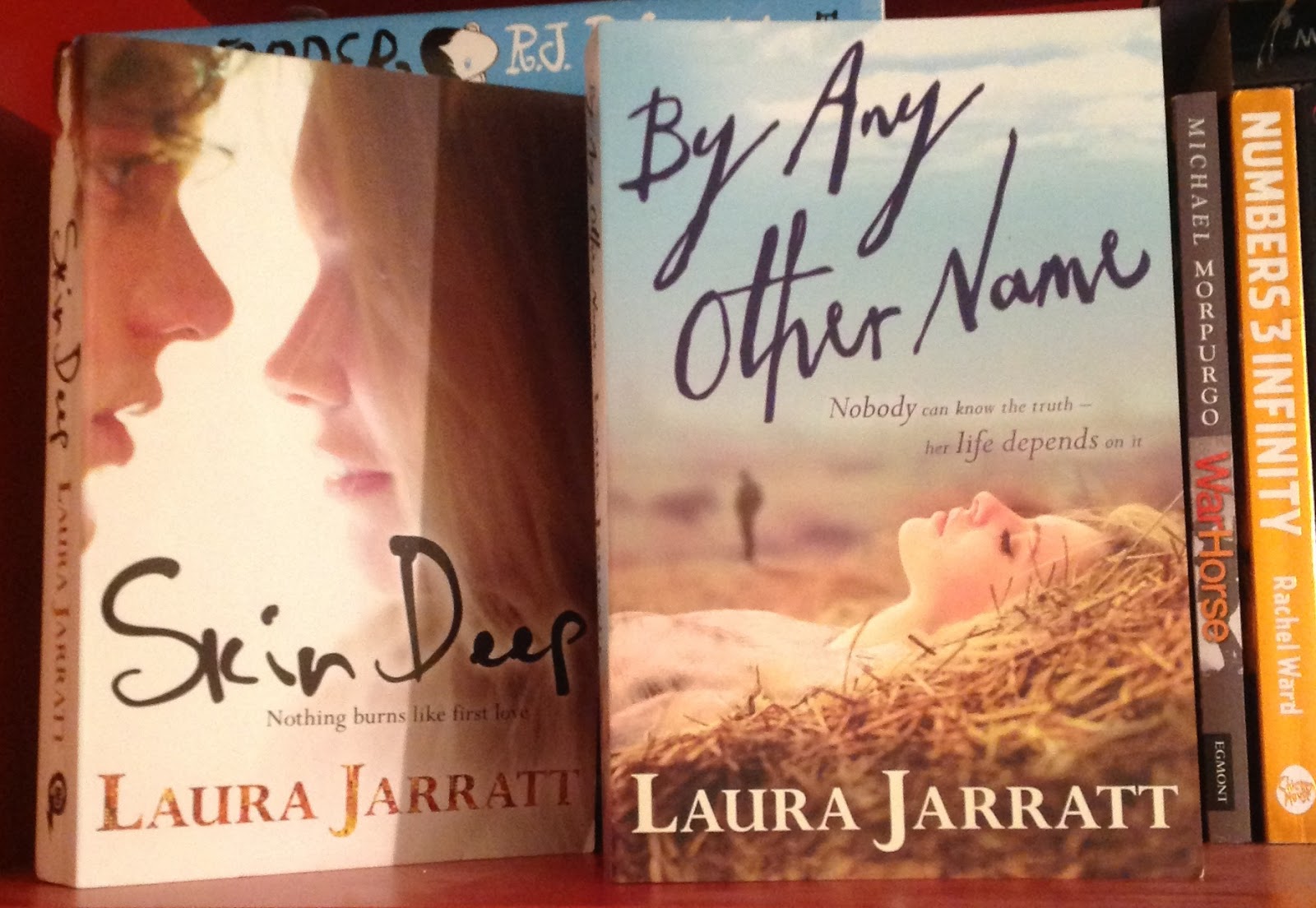


Oh, Laura Jarratt's By Any Other Name. I loved her debut, Skin Deep. A great British teen romance. So I can't wait to read this next one!


Phil Earle's Heroic has been picking up some great reviews, but to be honest, I'd read this whether it had great reviews or not, because his debut, Being Billy, and the follow-up Saving Daisy, were brutally honest and brilliant.


And to complete the line up - Fractured, by Teri Terry. Teri is a good friend of mine, and I read this when it was a manuscript. But I know that some exciting things happened to it after I originally read it, so I'm eager to spot the changes and just generally enjoy it all over again!

I think, seeing as I'm building my own summer reading list, that I should offer up a recommendation, too! And, without hesitation, it's Pantomime, by Laura Lam. I want, nay NEED, to review this book and shout about it to EVERYONE I KNOW, but sadly, any kind of good review would ruin the book entirely. So I'm restraining myself. But go read it. It will be different from any teen fiction you've read before.

I'd love to hear other suggestions if anyone has any! Particularly suggestions of debuts - I seem to have LOTS of follow-ups on my list!


Monday, 22 April 2013

Books Within Books - Hiding one world within another

As if offering up one world on a plate wasn't enough to quench readers' thirst, some books can't resist offering up more than themselves. You open the front cover expecting one book, and instead: you get two. Or three. Or several. These books are the hussies of the literary world, shamelessly name-dropping titles and characters in the name of storytelling, absorbing other titles and plots and characters into themselves.

It's a tactic I love.

Especially when the author references a book you've read. It's a chance to feel like you've been wrapped up in the book - it's taken you in. (And it's a chance to feel just a little bit smug that you understand the references and in-jokes.) After reading this piece on the Guardian website by Julia Eccleshare, I've been tempted to find some of my favourites...

There's the obvious ones - Matilda and Inkheart. Reading Matilda was how I first heard of Moby Dick and Charles Dickens. And I loved how much she loved books. I have no idea how much I liked books before I read Matilda, but I know that once I started reading it, I fell in love, and it's a love that will never grow old. (It also taught me that liking books is OK. Actually, it taught me that liking books is pretty darned cool.)

I came to Inkheart much later, but I wish I'd read it as a kid. The quotes at the start of each chapter would have made me feel so included and smart, and Meggie and Mo, live for books.

I bet if I'd read it as a kid, I'd have dreamed of being Mo when I grew up. (I still do, but don't tell anyone.)

Using books within books does lots of things. If you've read the books, it makes you feel included. If you haven't, it makes you feel like the characters (and by association, you as the reader) are smart. Often, it's a trick used to amplify an aspect of the story. It might be a character's infatuation with Romeo and Juliet, for example, or Pride and Prejudice or Wuthering Heights. In fact, when it comes to teen fiction, it's usually one of these. I'm not sure why exactly - perhaps because they are books and plays that most teenagers would recognise and still think are intelligent.

Looking for Alaska, by John Green (I swear, one of these days I will write a blog and not mention John Green) (ALL LIES) provides a window into his own love for literature and writers. One of the main characters, Alaska, has an obsession with books, in particular The General In His Labyrinth, by Gabriel Garcia Marquez, and the main character himself is caught up on people's last words. Both characters' literary fixations play an important part of the story, reflecting on both the characters and the plot.

Rainbow Rowell's Eleanor & Park is a little different, using comic books, especially the X-Men, to connect the two main characters, b
oth of whom feel different and alien. I've never read a comic book, but darned if I didn't want to by the time I'd finished with this book. (Which I haven't reviewed here yet, but I'd recommend it with everything I have.)


And then there's one of my all-time faviourites: The Princess Bride, by William Goldman. It's a bit of a cheat, because it doesn't contain a real book. But it's so genius in its execution that I had to mention it here. It's a true book within a book. Goldman's aim was to abridge the original The Princess Bride, by S. Morgenstern, which contained too much description of scenery and history for Goldman's liking. So dotted throughout the book are Goldman's notes on what he's cut out and why.

But of course, S. Morgenstern doesn't exist, and neither does his original book. It was all about Goldman playing around with the value that we put in books and stories. It's incredibly fun and has fooled an incredible number of grown adults (which only makes it more fun).

Mainly, I suppose, writers are book fans, and some of that is bound to seep into their stories, and how can characters who love books ever be a bad thing? More, I say, MORE!